Outer Banks septic guide
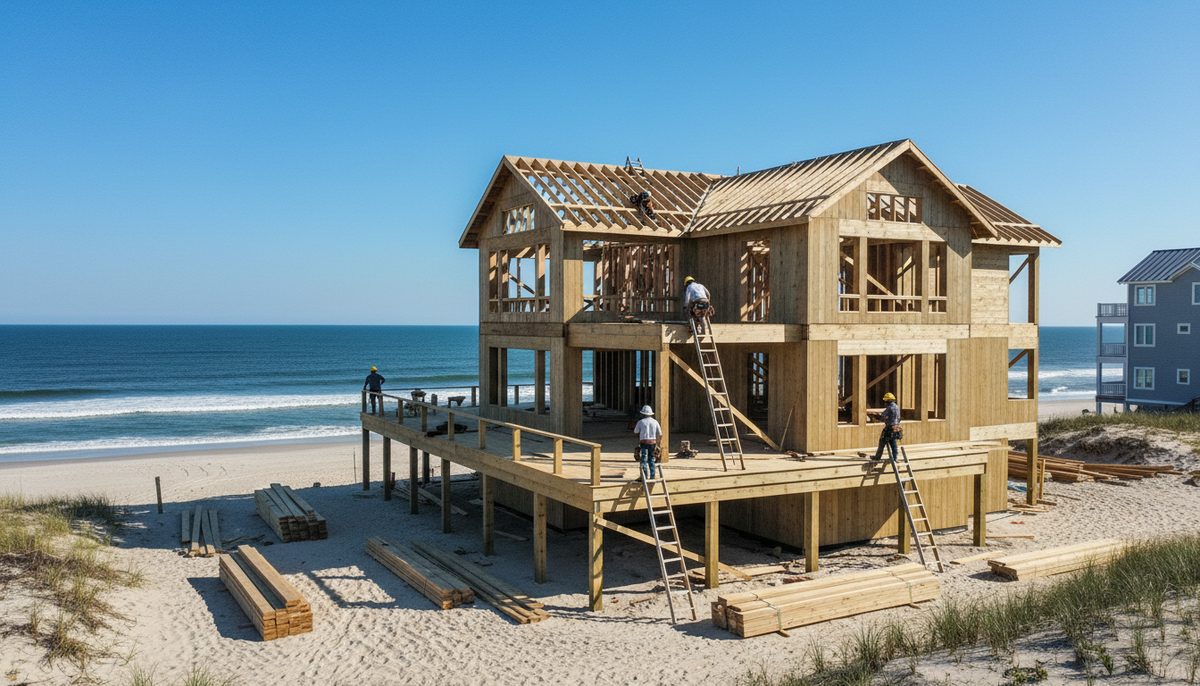
Can you build your own house in the Outer Banks?
Yes — North Carolina's owner-builder exemption lets you build on land you own for your own occupancy, and it carries a 12-month occupancy presumption with real teeth. What the exemption does and does not waive.
Yes, genuinely — North Carolina writes the owner-builder path into the same statute that licenses contractors, and it is not a loophole; it is a deliberate exception. But the exception is written around one word, occupancy, and the statute enforces that word in a way a casual reading usually misses. Here is what the exemption actually says, and what it means on a coast where most houses exist to be rented.
The details
The rule that makes everyone else licensed first: GC licence required at $40,000+ — bid, construct, or manage construction of a building whose undertaking costs $40,000 or more and you are deemed a general contractor who must hold a state licence. Without an exception, building your own house would require the same credential as a commercial builder. The exception exists so it does not.
What it covers: Owner-builder exemption applies to a person building or altering a building on land they own, provided the building is intended solely for occupancy by that person and their family or their corporation. Read it as three conditions that must all be true — you own the land, the building is for you, and you are the builder. Miss any one and the exemption was never available, whatever the invoice says.
Now the teeth. The statute does not take your word for the intent: if the building is not occupied by that owner for at least twelve months after completion, the intent is presumed absent. That presumption converts a state of mind into a fact the calendar can check, and it is aimed at exactly the arrangement that tempts people on this coast — the 'owner-built' rental house that lists with a property manager the week the paint dries. If the plan was a rental, the exemption did not apply, and the build was an unlicensed contracting job from the first footing.
What the exemption never waives is the part people assume it does. It removes the licence requirement and nothing else: the CAMA permit for a mapped AEC lot, the building permit, the elevation standards, the inspections — all of it applies to an owner-builder exactly as it applies to a general contractor, because those rules attach to the structure and the land, not to the builder's credential. An exempt owner still builds a fully permitted, fully inspected house.
The honest summary: if you are building your own residence, on your own land, to live in — the law is on your side and always has been. If the project is a rental, a second home for the family of a corporation that will not occupy it, or a build for someone else, the exemption is not a cost strategy; it is a trap with a twelve-month fuse. We are glad to talk through which side of that line your plan sits on before you commit a dollar.
Owner, occupant, builder — all three, or none of them. Build your own house if it is truly yours to live in, and let us price the alternative honestly if it is not.
On the record: Owner-builder exemption (North Carolina General Assembly — N.C.G.S. 87-1(b)(2), owner-builder exception (ncleg.gov, retrieved 2026-09-17)) · GC licence required at $40,000+ (North Carolina General Assembly — N.C.G.S. 87-1, 'General contractor' defined; exceptions (ncleg.gov, retrieved 2026-09-17)) · Dare County local elevation standard (Dare County, NC — Build Responsibly, Local Elevation Standards (darenc.gov, retrieved 2026-09-17))
Hand-verified 2026-09-17 against the primary sources named above; where a fact could not be verified it was left out, never guessed.